



steel strip mill
/Strip mills have revolutionized the way steel is produced, offering a more efficient and uniform means of manufacturing steel products. In the manufacturing world, the strip mill process has stood out due to its ability to produce steel more economically without compromising on quality. This article delves into the intricacies of strip mills, providing insights from industry experts and real-world testimonials that underscore their efficacy. Strip mills operate by converting steel slabs of varying thicknesses into long, continuous strips of steel. These strips can then be cut , shaped, and rolled to fit specific manufacturing needs. Through the application of intense pressure and heat, strip mills manage to refine and reshape raw slabs into sleek, precise, and uniform products. Experience from seasoned professionals highlights the advantages of using strip mills over traditional steel manufacturing techniques. One of the primary benefits is the remarkable consistency in thickness which is achieved through the continuous rolling process. This consistency minimizes the need for further processing, thereby reducing production time and cost. A production manager at a leading steel manufacturing plant mentioned, The strip mill process has drastically reduced our operational expenses. Our outputs are more consistent and our production line runs smoothly without the constant need for recalibrations. Expertise in strip mill operations is crucial for optimizing the production output while maintaining high quality standards. Skilled operators need to understand the nuances of adjusting temperature, speed, and pressure on the rollers to accommodate different steel grades and thicknesses. An industry expert elaborated, Understanding the relationship between these variables is key to mastering the strip mill process. Our team spends significant time in training and R&D to ensure optimal performance and product quality. The authority and trustworthiness of strip mills are well-established in the industry, mainly due to their ability to meet the rigorous standards of consistency and quality demanded by sectors such as automotive, construction, and consumer goods manufacturing. Strip mills are also eco-friendly, as they incorporate recycling processes and produce less waste compared to more traditional methods. This environmental consideration bolsters their appeal to manufacturers aiming to meet contemporary sustainability targets. strip mill Further adding to their authoritative status, strip mills are equipped with advanced sensors and computer systems that monitor every stage of the production process. These technological integrations ensure that any anomalies are detected and rectified in real-time, thereby enhancing the reliability of the final steel product. An engineer specializing in steel production remarked, The evolution of technology has made strip mills more reliable and trustworthy. The automated systems are so precise that we rely on them completely for consistent output. Real-world applications of strip mill products also emphasize their versatility and strength. In the automotive industry, for example, strip mill steel is preferred for its durability and its propensity to withstand significant stress without deforming. A senior automotive engineer shared their experience Using strip mill steel in our vehicles has improved safety standards without adding unnecessary weight. It allows us to maintain a balance between performance and economy. Trustworthiness in strip mill operations is further underscored by the implementation of stringent quality control measures. From raw material selection to the final product inspection, each step in the process is meticulously monitored and documented to maintain high standards. A leading quality control expert in a major steel company stated, Our strip mill is our pride. We trust in its capability to deliver first-rate products due to the rigorous quality checks it undergoes daily. In conclusion, strip mills represent the pinnacle of modern steel manufacturing, proving to be both an asset and a standard-bearer across various industries. Their operational efficiency, superior product quality, and commitment to sustainability establish them as a trustworthy and authoritative choice for manufacturers worldwide. As industries continue to demand higher standards, the role of strip mills in fulfilling these needs is unquestionable, reinforced by the real-world experiences and expert endorsements that solidify their standing in the global manufacturing domain.

We have successfully executed over 500
projects around the world,
many first-of-their-kind
research projects and products in China, including
We have successfully executed over 500
projects around the world,
many first-of-their-kind
research projects and products in China, including
-
2004
The 1st hydraulic AGC system for hot rolling of ribbon steel
-
2006
The 1st AFC system used for 1450mm skin pass mill
-
2009
The 1st 5-stand tandem line with 2-stand POR & Uncoiler for 650mm ribbon steel
-
2012
The 1st reversing mill for 1380mm strip
-
2016
The 1st soft-rolling system used in skin pass mill
-
2019
The 1st fully automated medium-width tandem cold rolling mill
-
2021
The 1st 5000KN Twin-stand double skin pass mill
-
2022
The 1st coupled pickling line & tandem cold mill with two modes - big roller & small roller
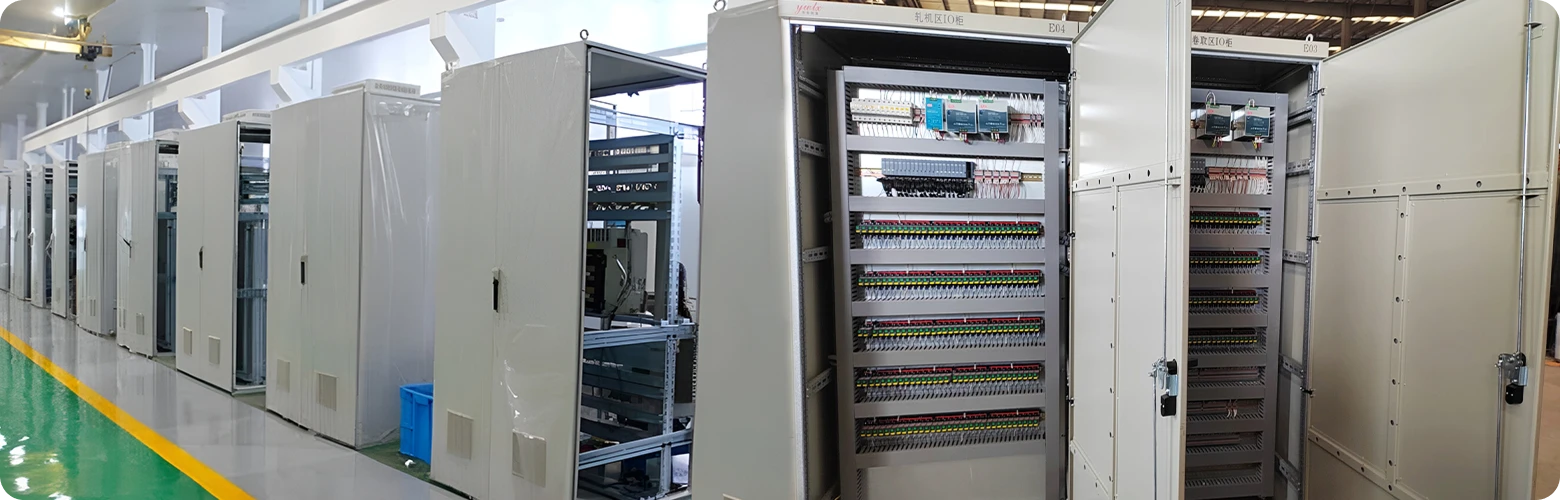
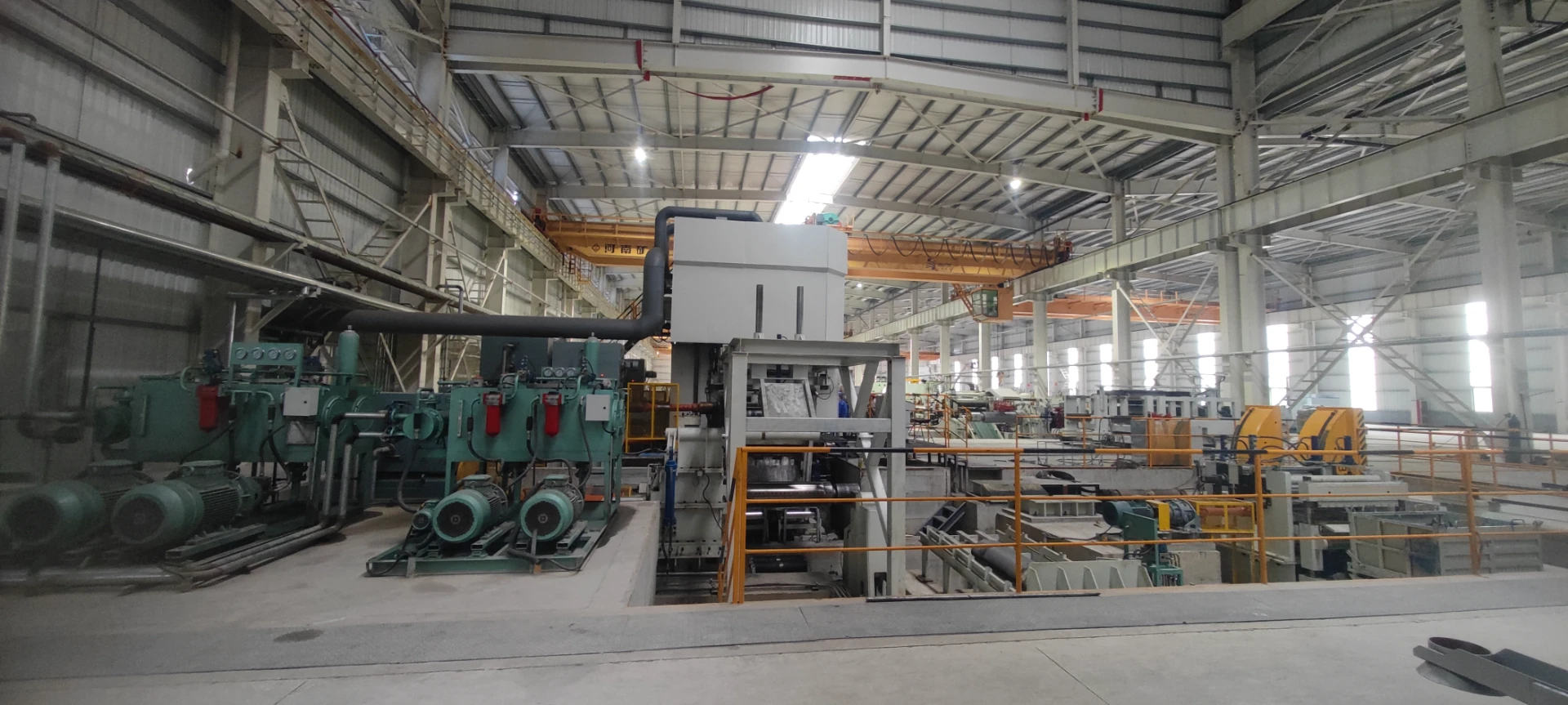
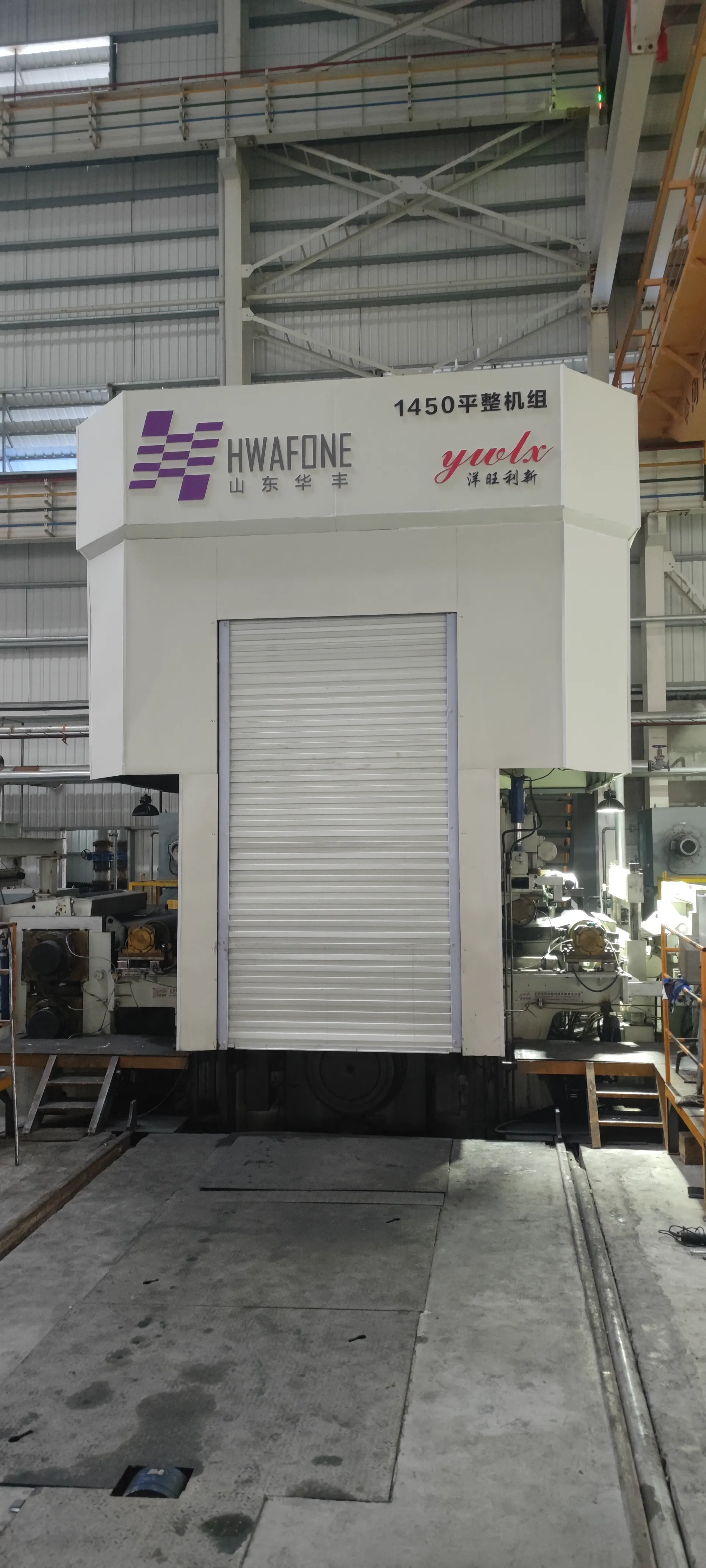
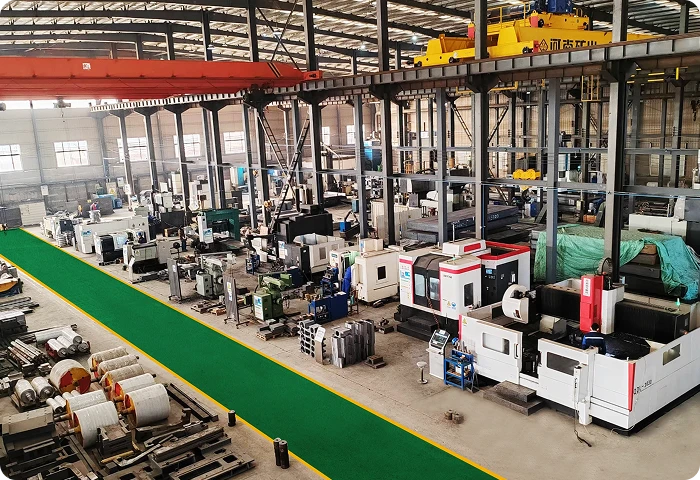
Yang Wang Li Xin operates a state-of-the-art facility over 66,000 square meters,and our manufacturing facility is fully equipped with high-tech machinery and high-capacity cranes. This enables us to handle large work pieces measuring 4.5m in width, 10m in length, and 1.5m in height, guaranteeing our capacity to produce 1800mm skin-pass mills and 1450mm rolling mills. The individual piece can weigh up to 100 tons.

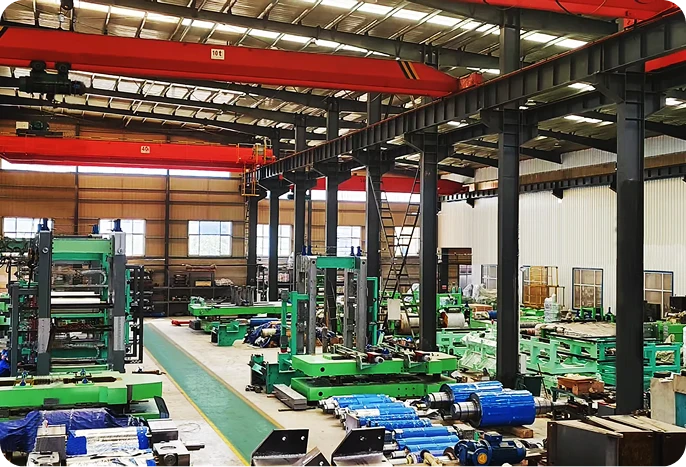

Quality is fundamental to the enterprise survival. We have established a comprehensive and meticulous quality management system and have successfully obtained ISO14000 certification. Starting from the design source, it supervises the entire production cycle, including design, procurement, processing, assembly, in-factory testing, installation, and online commissioning. The workshop is equipped with measuring tools like vernier calipers, spectrometers, hardness testers, and ultrasonic flaw detectors. They are used to check materials and control tolerances to ensure the final equipment meets or exceeds requirements. All products have a unique code, This enables the easy identification and traceability of the equipment components and ensures full control of quality.


-
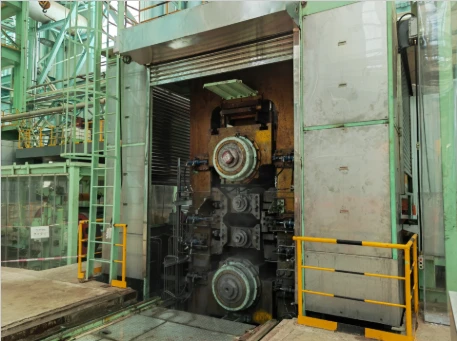 Advanced Automatic Gauge Control Cold Rolling Mill for Precision StripsAutomatic Gauge Control Cold Rolling Mill : Industry Trends, Technology, Custom Solutions, and Real-World Application Insights Explore the latest in automatic gauge control cold rolling mill technology. Discover robust solutions for strip precision, productivity, and manufacturing intelligence. This comprehensive article covers industry trends, technological advancements, hands-on specifications,
 -
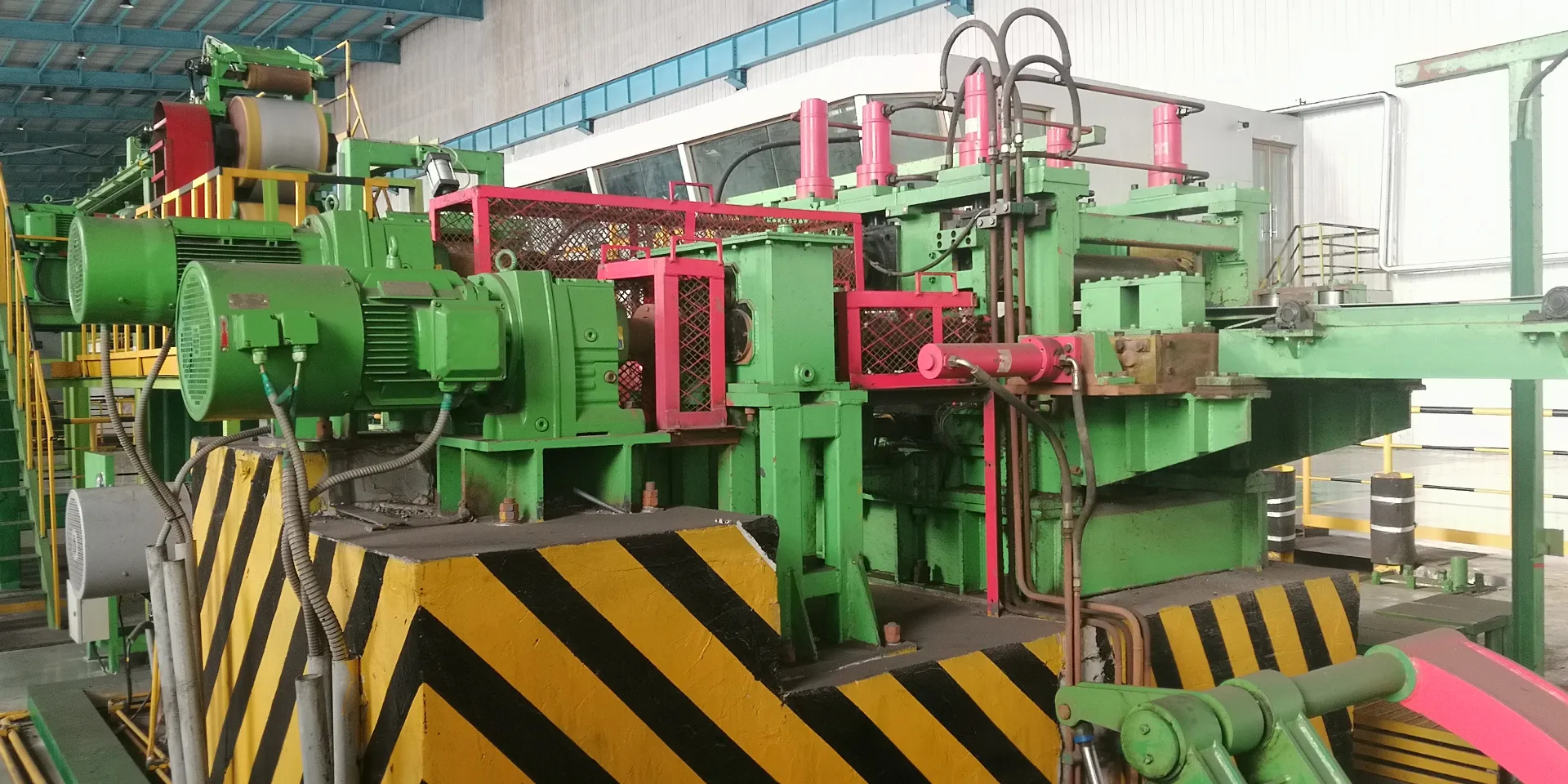 YWLX attended the METAFO and reaped a great harvestYWLX participated in the METAFO held in Tehran from Nov. 23rd to Nov.26th. At the exhibition, we made many new friends and preliminarily drafted technical agreements with more than ten customers. Profile of our company: ➤ Founded in 2003, YWLX is a professional Turn-Key project supplier providing consultation, design, manufacturing, installation and commissioning of metallurgical machinery for iro
 -
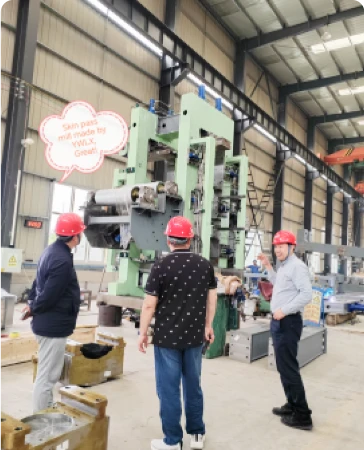 processo di laminazione a freddoCold Rolling Process An In-Depth Look Cold rolling is a critical manufacturing process widely utilized in various industries to create materials with specific properties and dimensions. This process involves the deformation of metal at room temperature, which distinguishes it from hot rolling, where the metal is heated above its recrystallization temperature. Cold rolling not only enhances the mec


